
KSA Industrial Automation Company is an automation contractor for oil and gas in Saudi Arabia, delivering PLC, HMI and SCADA programming, FAT, SAT and loop checks for plants, skids and tank farms. We are Saudi Aramco approved, and a typical PLC system is programmed in 2–6 weeks. Documentation is built to the standard that vendor-listed projects expect, not added at the end.
What you receive: a written proposal listing scope, test plan, document package and price, issued within one working day of your I/O list and P&IDs. Request a quotation
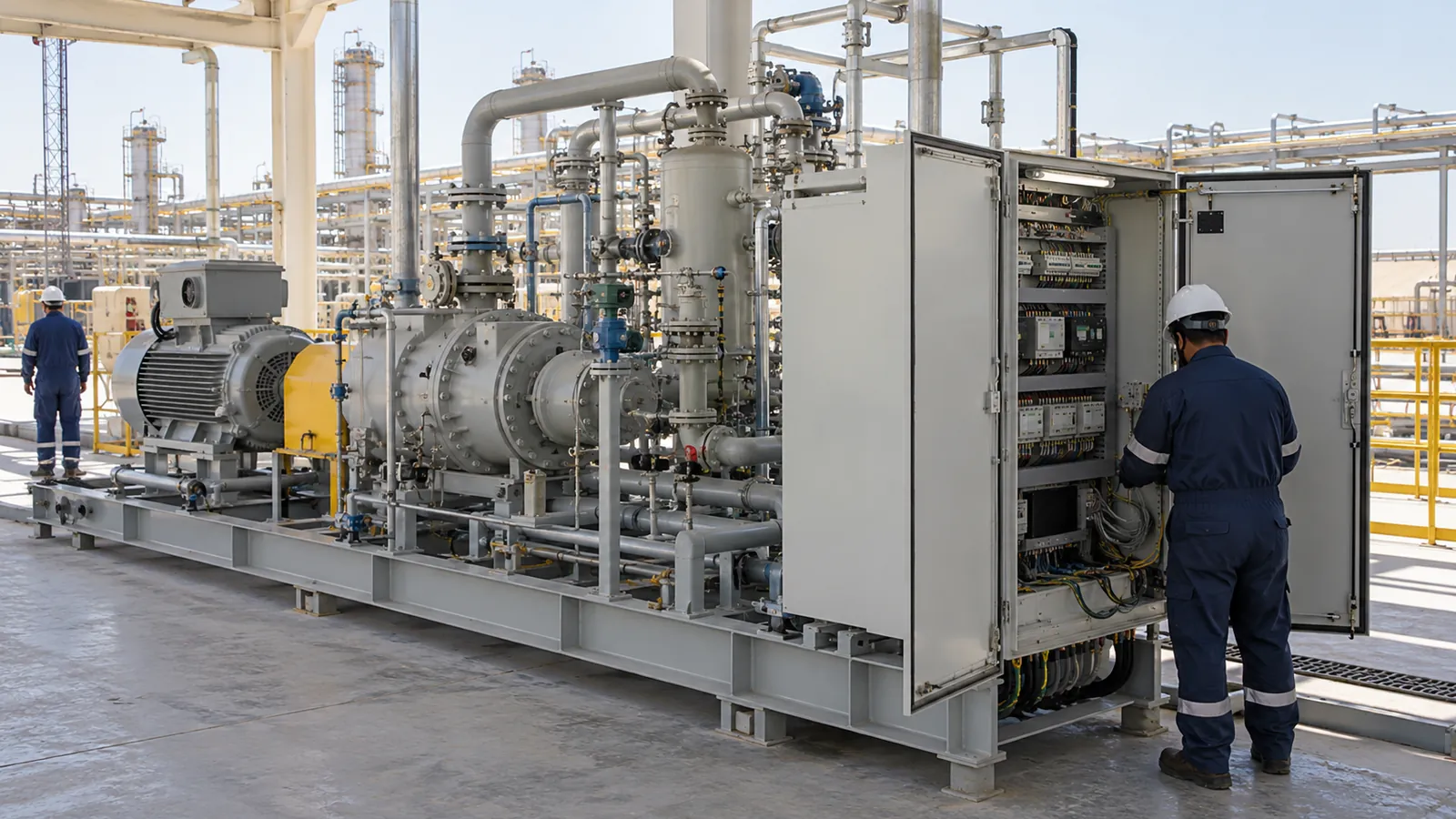
Automation contractor for oil and gas: scope of supply
| Scope | Platforms and range | Standard | Typical duration |
|---|---|---|---|
| Skid and compressor control | S7-1500, ControlLogix, Modicon M580 | IEC 61131-3 | 2–6 weeks per system |
| Tank farm monitoring and SCADA | WinCC, FactoryTalk, AVEVA, Ignition | ISA-18.2, ISA-101 | 4–12 weeks |
| Links to your DCS or SCADA | Modbus TCP, OPC UA, Profinet, Ethernet/IP | IEC 62443 basics | 3–8 weeks |
| Loop checks and instrument sign-off | Loop folders by tag | ISA/IEC loop check practice | Per project schedule |
| Functional FAT and SAT | Simulated I/O, cause and effect tests | Project ITP | Per project schedule |
Where a safety instrumented system is defined under IEC 61511, it stays independent of our control layer and we read its status over a hard-wired or serial interface. See tank farm monitoring and compressor and skid control for the two usual packages.
What does an automation contractor do on an oil and gas project?
The contractor turns the process description into working control and proves it before start-up. It reads P&IDs and cause and effect charts, writes the code, builds the operator screens, tests them against simulated I/O, then checks every loop in the field.
- You send the P&IDs, I/O list and cause and effect charts.
- We issue a proposal with a test plan and document list.
- We write the functional design and get it approved.
- We programme, then run the FAT with your inspector.
- We ship, then perform loop checks and SAT on site.
- You receive the dossier: as-built code, loop folders, test records and backups.
- Support is remote the same day, and on site within one working day in the Eastern Province.
What is a factory acceptance test report?
It is the signed record of a control system test at the workshop, before anything ships. Each line states the test, the expected result, the actual result and who witnessed it. For a functional FAT we force inputs, run start and stop sequences, trip every interlock and prove the link to your DCS. Open points go on a punch list that must close before dispatch. The same discipline continues on site in control system commissioning.
How do loop checks work on an oil and gas site?
A loop check proves one instrument end to end. We tie the tag to its folder sheet, confirm range and calibration, inject or simulate the signal at the field device, and watch the value, units and alarm limits arrive correctly on the HMI. Control valves are stroked and their feedback confirmed. The folder is signed tag by tag, which gives your commissioning team a clean count of what remains. Our loop checking and instrumentation page lists the deliverables.
Which approvals and standards apply to our work?
We are an approved contractor to Saudi Aramco, SABIC and the Royal Commission for Jubail and Yanbu and have worked on projects for all three. Our certifications include ISO 9001, ISO 14001 and ISO 45001, plus classification to Lloyd's Register Rules, RINA and ABS, which suits marine and offshore skid packages. We programme to IEC 61131-3, design alarms to ISA-18.2 and screens to ISA-101. Where your company specification is stricter, we build to it.
Oil and gas automation questions
Who is an automation contractor for oil and gas in Saudi Arabia?
KSA Industrial Automation Company provides automation contracting for oil and gas from its base in Dammam, covering control programming, SCADA, FAT, SAT and loop checks. It has operated since 1995 and is approved by Saudi Aramco, SABIC and the Royal Commission.
What affects the cost of oil and gas control system work?
The main factors are I/O count, the number of skids or tanks, the DCS interface, the documentation package, the extent of witnessed FAT and the time on site for loop checks and SAT. A complete I/O list and cause and effect chart allow a firm price.
How long does an oil and gas automation project take?
It depends on I/O count, document approval cycles and the shutdown window. PLC programming typically takes 2–6 weeks per system, SCADA 4–12 weeks and DCS or SCADA links 3–8 weeks. Commissioning follows your project schedule.
Can you support our EPC contractor's specification?
Yes. We answer the specification clause by clause, submit the functional design and FAT procedure for approval, and hold the build until your engineer or EPC contractor has signed them off.
Do you take over a skid supplied with a vendor PLC?
Yes. We review the vendor program, map its data to your SCADA or DCS, document the interface and complete the integration testing, without rewriting any code that the vendor must continue to support.
What should we send for a quotation?
Send your I/O list, P&IDs or functional description, the specification clauses that apply and the project schedule. Existing PLC models and the target DCS or SCADA help us scope the interface work.
Need an automation contractor for oil and gas in Saudi Arabia? Send us your I/O list, cause and effect charts and P&IDs, and get a quotation within one working day. Email: inquiry@ksaindustrialautomation.com | Request a quotation