KSA Industrial Automation Company provides production line automation in Saudi Arabia, covering PLC, HMI, drive and line-level SCADA integration for packaging, filling, palletising and discrete manufacturing lines. We programme each machine, coordinate the line, commission it with your operators and keep the line running after handover.
What you receive: a written proposal with the line control architecture, machine-by-machine I/O scope, HMI approach, test plan and schedule within one working day of receiving your line layout, I/O list or functional description. Request a quotation
What does production line automation include?
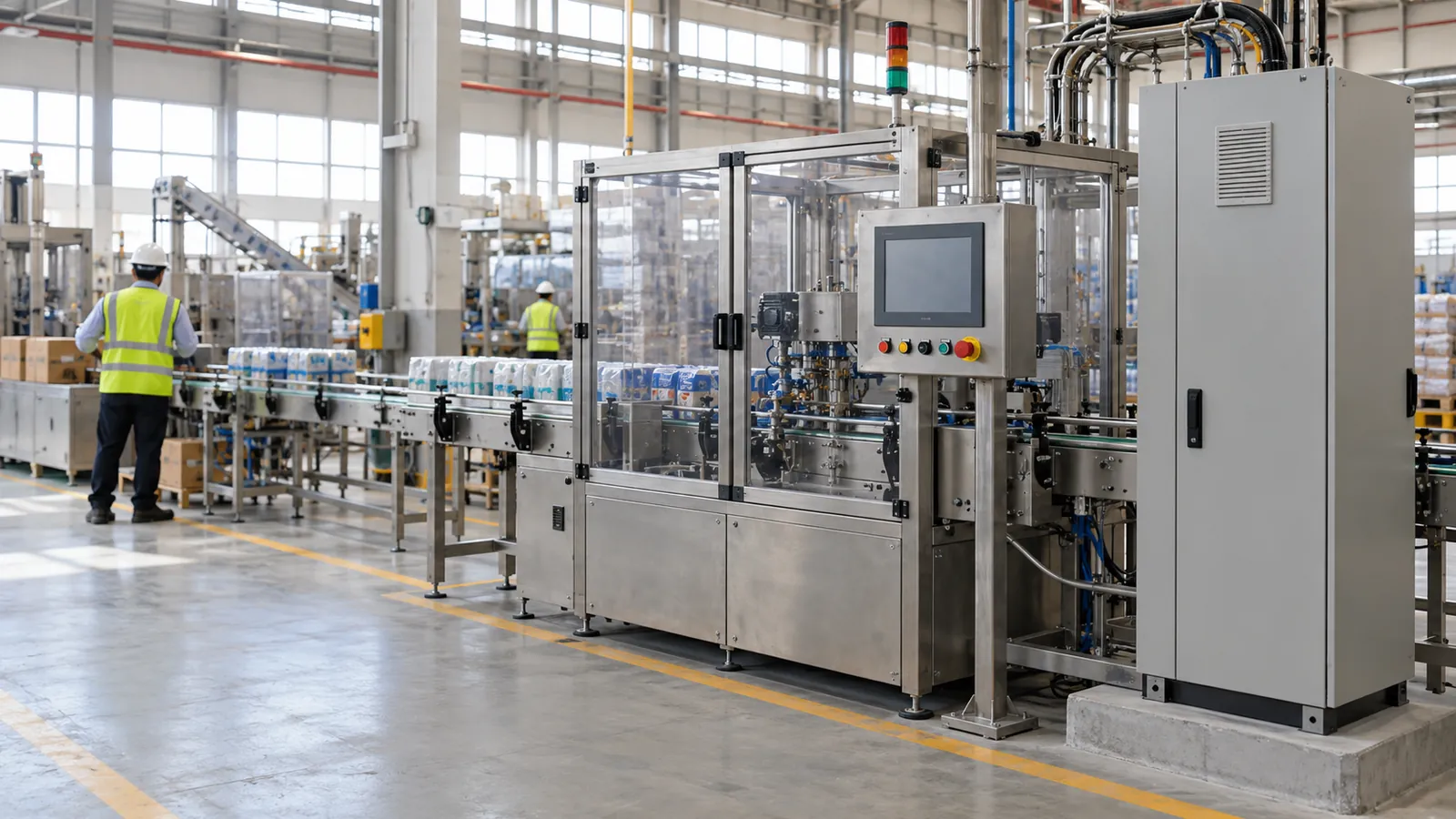
It links the machines on a line into one controlled process. Each machine has its own PLC logic, drives and safety functions, and a line controller or SCADA coordinates speed, buffers, recipes and faults between them. The goal is steady output with short, well-understood stoppages.
The scope usually covers:
- machine logic for fillers, cappers, labellers, wrappers, case packers and palletisers;
- servo and variable-speed drive integration, including motion profiles and synchronisation;
- conveyors with accumulation, merge, divert and line-speed matching;
- recipe and changeover management, so a product change is a selection rather than a re-tune;
- reject, counting and batch records at line level; and
- fault reporting by machine and by reason, which is the basis of OEE figures.
Guarding and emergency-stop functions are designed to the safety standard your machine builder or consultant specifies, and the line logic respects them.
Production line automation: what we deliver
| Item | Scope / platform | Standard | Typical duration |
|---|---|---|---|
| Machine PLC programming | Siemens S7-1200/1500, Rockwell CompactLogix/ControlLogix, Schneider Modicon M340/M580 or ABB AC500 | IEC 61131-3 | 2–6 weeks per system |
| Machine and line HMI | WinCC Comfort/Unified, FactoryTalk View or Vijeo/EcoStruxure Operator Terminal Expert | ISA-101 where specified | 1–4 weeks |
| Line SCADA and data | Line overview, downtime reasons, production counts, recipes (WinCC, FactoryTalk, AVEVA, Ignition) | Client reporting format | 4–12 weeks |
| Industrial networks | Profinet, Ethernet/IP, Modbus TCP and OPC UA between machines and line | IEC 62443 basics | 3–8 weeks |
| FAT, SAT and line start-up | Simulated test, then on-site commissioning and ramp-up | Client ITP | Per project schedule |
We programme on Siemens, Rockwell, Schneider and ABB platforms and build with ABB, Schneider Electric and Siemens components.
How do you coordinate machines from different suppliers on one line?
We define the interface between machines before any code is written. A packaging line often combines machines from several suppliers, each with its own PLC brand. We agree the handshake signals for each hand-over point, such as ready, running, fault, and product present, and we write them into one interface specification that every supplier signs up to.
Line speed is then set from the slowest machine and propagated upstream and downstream, with buffers absorbing short stops. All machines report to one line overview using a common fault list. If a supplier's PLC is closed, we read its status through OPC UA or Modbus and keep the machine's own logic untouched. The result is one operator view for the whole line, where before there were four.
How do I reduce downtime on a packaging line?
Start by measuring it. Downtime falls when each stoppage has a recorded cause, a duration and a machine, because the largest few causes then become visible. Our line data layer records this automatically from machine states, and the operator adds a reason when the cause is not obvious from the signals alone.
Typical improvements follow from that data: better accumulation between machines so a minor stop does not halt the line, faster changeover through stored recipes, clearer fault messages that tell the operator what to check, and spare-part lists drawn from the most frequent faults. Ageing controllers cause avoidable stops too, and our PLC retrofit service replaces them with minimal line downtime.
How is a line automation project delivered?
- Enquiry. You send the line layout, machine list, I/O lists or a functional description.
- Site data. We confirm each machine's controller, network port, drive type and the changeover pattern.
- Design. We issue the interface specification, line logic description, alarm list and HMI layout for approval.
- Programming. We write and configure PLC logic, drive parameters, HMI and line data.
- Factory acceptance test. We test the logic with simulated machines, or at the machine builder's yard, with your witness if you wish.
- Site acceptance and ramp-up. We commission machine by machine, then run the whole line at rate. See control system commissioning.
- Documentation. You receive source code, backups, I/O lists and operator guides.
- Support. We remain available for product changes and fault call-outs.
Who we automate production lines for
KSA Industrial Automation Company has worked in Saudi Arabia since 1995 and is approved by Saudi Aramco, SABIC and the Royal Commission for Jubail and Yanbu. Our work for all three sits within management systems certified to ISO 9001, ISO 14001 and ISO 45001.
Lines we automate include food and beverage filling and packing, plastics extrusion and moulding, building-materials production and general manufacturing. Plants in Dammam, Jubail, Riyadh and Jeddah industrial cities share the same needs: dependable start-up, short changeovers and quick support. We are based in Al Shati District, Dammam, and we take projects in all regions of Saudi Arabia. See also our food and beverage automation page.
Common questions before you request a quotation
Who provides production line automation in Saudi Arabia?
KSA Industrial Automation Company provides PLC, HMI and line SCADA, from machine PLC programming to line SCADA and commissioning, for factories and machine builders. We have worked on projects for Saudi Aramco, SABIC and the Royal Commission. We support each line after handover.
What affects the cost of automating a line?
Cost depends on the number of machines, the I/O count, the controller brands, motion and drive complexity, the line SCADA and data scope, the number of recipes, the test requirement and the shutdown time available on site. Your layout and machine list let us price these against your specification.
How long does a line automation project take?
One machine is usually programmed within a few weeks. A multi-machine line takes longer because of interface design, factory testing and ramp-up. Machine delivery dates and production shutdown windows set the schedule more than programming does.
Can you automate a line that mixes several PLC brands?
Yes. We connect machines through their supported protocols, write one interface specification, and present a single operator view. Each machine keeps the controller its builder chose, and we add the line logic and data layer above them without rewriting working machine code.
Can you take over an existing line with no source code?
Yes, in most cases. We record the I/O, observe the machine behaviour, and either document it for support or rebuild the logic from scratch for a controller you can maintain. We agree the approach with you before work begins, and the new code is tested offline first.
What should I send to get a quotation?
Send the line layout, a list of machines with controller makes, I/O lists or a functional description, and your target rate and product range. Photos of the existing control cabinets help. Your proposal then sets out scope, standards, duration and price.
Production line automation in Saudi Arabia, from one machine to a full line. Send the line layout and machine list, and expect a quotation within one working day. Email: inquiry@ksaindustrialautomation.com | Request a quotation